
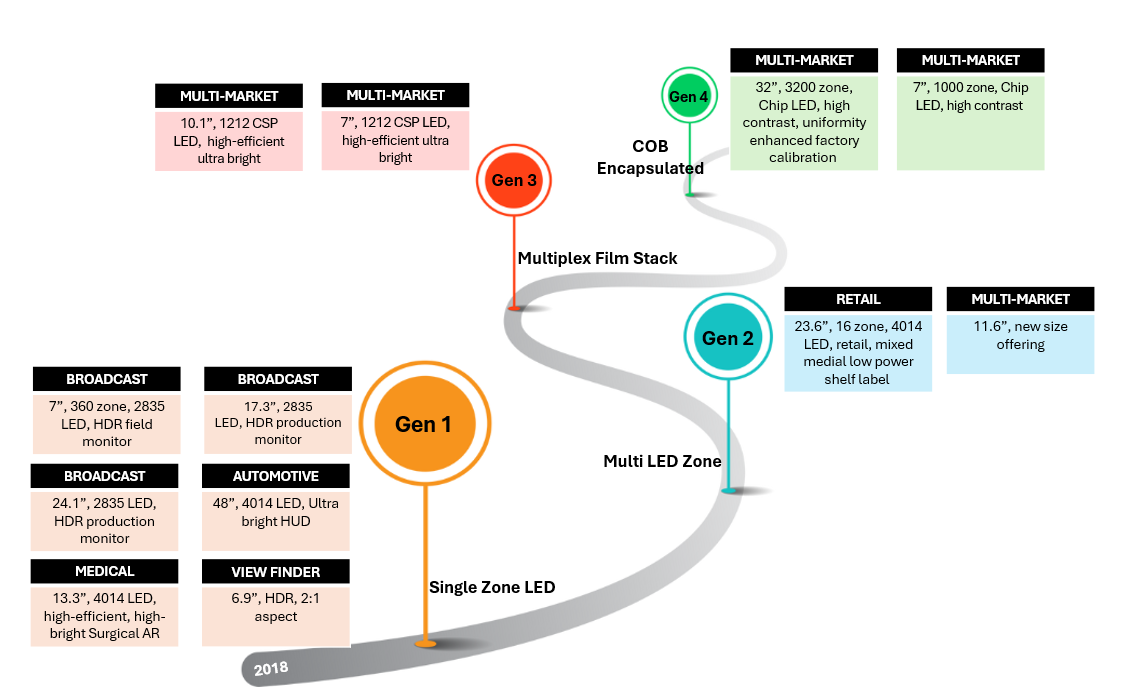
At Lincoln Technology Solutions (LTS), innovation isn’t just something we talk about — it starts with our customers and the challenges they bring us. Since 2018, those conversations have driven us to pioneer Mini-LED Full Array Local Dimming (FALD) technology, reshaping how industries experience brightness, contrast, and visual fidelity.
Before 2018-19, Mini-LED and local dimming lived mostly in prototypes and niche professional applications. That changed in 2019, when Mini-LED entered mass production, such as, TCL launched the world’s first Mini-LED TV, the 8-Series, featuring ~25,000 LEDs and 1,000 dimming zones. Tech media and analysts hailed it as a turning point for mainstream adoption. But our customers were already asking for more. Broadcasters needed portable HDR, medical teams needed precise imaging, and industrial users needed rugged efficiency. They wanted not just local dimming, but pixel-like precision and true visual fidelity. That’s when we launched a single-LED-per-zone approach, enabling sharper HDR, deeper blacks, and dramatically reduced haloing.
And from there, each of our four generations was born out of the next set of customer demands, creating not just incremental improvements, but groundbreaking leaps in what displays can do.
What is Mini-LED and Local Dimming?
Mini-LED is a backlighting technology that replaces the relatively large LEDs used in traditional LCD displays with tiny diodes, each less than 0.2 mm in size. The advantage? You can pack thousands of them behind a panel.
Local dimming means dividing the backlight into zones and adjusting each one independently. During a dark scene, the backlight zones behind dark areas of the image are dimmed or turned off, creating deeper, richer blacks. Whereas, during a bright scene, the backlight zones are brightened to make highlights pop.
What is FALD (Full Array Local Dimming)?
Instead of lighting the screen from the edges, like the traditional edge-lit, FALD places LEDs in a full grid behind the panel. Each zone can dim or brighten as needed, giving:
- Ultra-high contrast (deep blacks and bright highlights side by side).
- Reduced halo/blooming effect around bright objects.
- Exceptional HDR performance, critical for industries like broadcast and medical imaging.
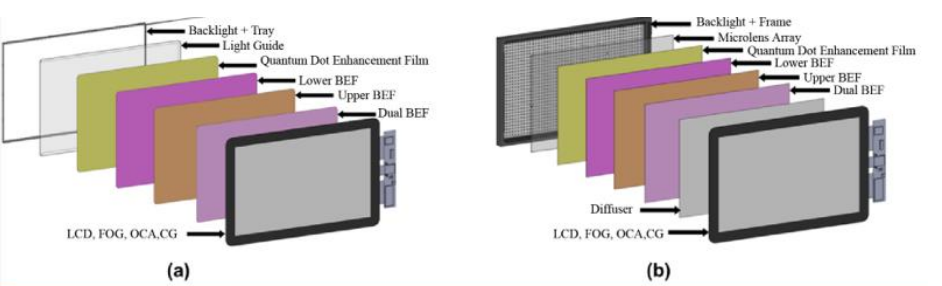
Figure. LTS’s LCD display stack, (a) Edge-lit and (b) FALD typical film arrangement
FALD requires more hardware and control algorithms but yields superior performance. FALD dramatically improves power efficiency by illuminating only the parts of the display that need it. With hundreds or even thousands of independently controlled zones (or even individual LEDs), FALD dynamically adjusts brightness of each independent zone in real-time. A simple downscaling FALD algorithm can compute in an inexpensive field programmable gate array (FPGA). The algorithm buffers data line-by-line until the final pixel row of a designated LED zone is reached. Then, the total grayscale value of each zone in the row is calculated during horizontal blanking. By performing the calculation at the end of each row in this manner, frame buffers and computational time at the end of the frame aren’t required. This method prevents latency between the backlight and video stream.
The LTS Mini-LED FALD Journey: From Gen 1 to Gen 4
Our Mini-LED journey has been driven by our customers’ bold vision and demanding requirements. Each time they pushed the limits of their applications, we stood as a trusted pillar, delivering display innovations that made those ambitions possible. That customer-driven innovation journey has led us through generational advancements, enabling true HDR, cost savings, thinner modules, and greater power efficiency. Let’s dive in.
Gen 1: Single Zone Per LED
Broadcasters were struggling with washed-out screens in bright field conditions. With Gen 1 FALD Mini-LED — 360 LEDs and 360 zones of precision — LTS delivered HDR clarity that powered Atomos field monitors, earning Best in Show at NAB 2019. The success soon caught the attention of automotive innovators like BMW, who partnered with us to engineer a 48″ backlight for the full-width head-up display in their iVision Dee concept car, bringing AR/VR visuals to life at CES 2023.
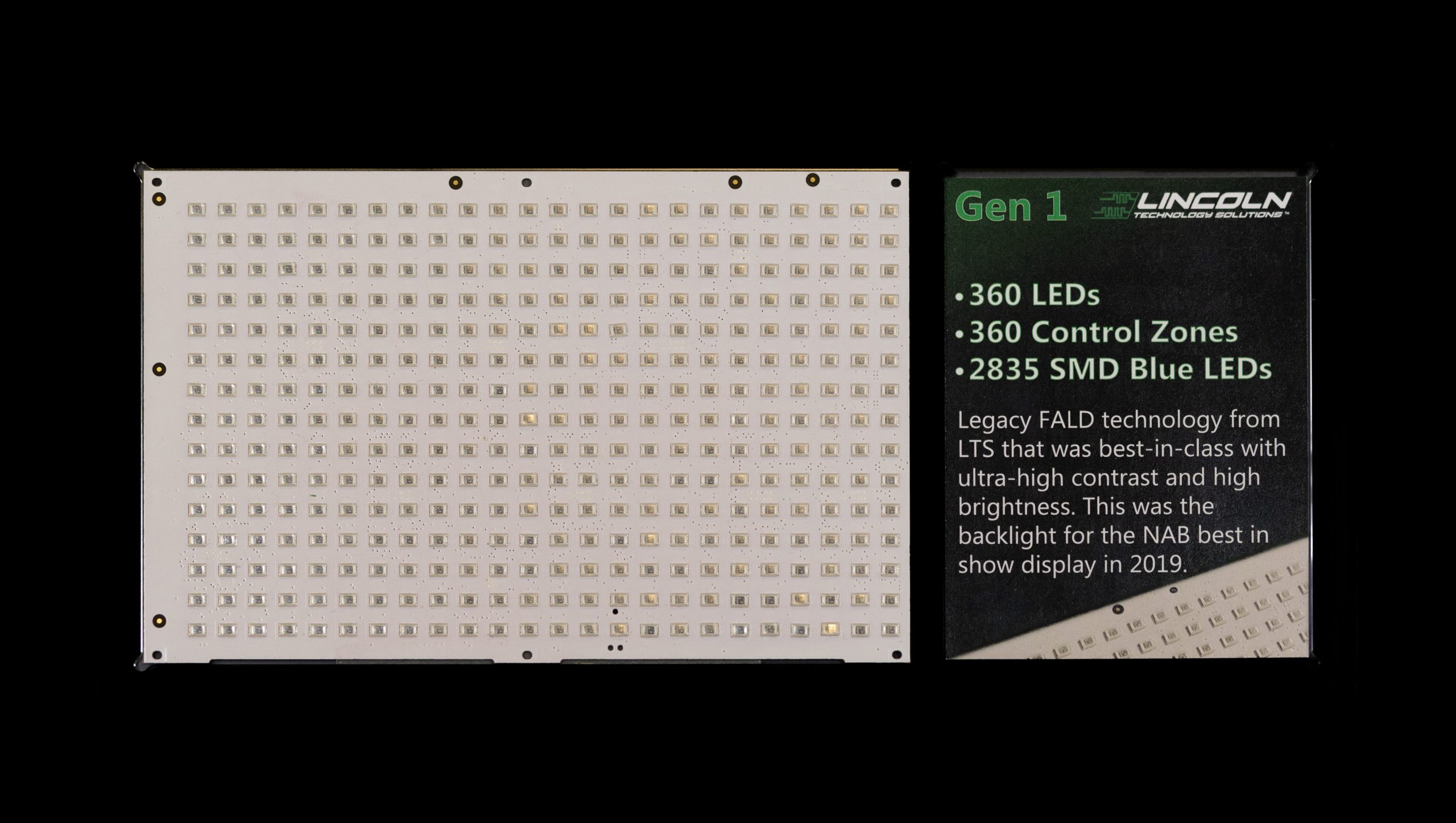
- Applications: Broadcast monitors (7″, 17.3″, 24.1″), automotive HUDs, medical surgical AR displays, and viewfinders.
- Specs: 2835 LED packages, early high-efficiency designs.
- Benefit: Proved Mini-LED FALD could move beyond prototypes into rugged, real-world applications.
- Industry First Win: Our 7″ 360-zone HDR field monitor earned recognition at NAB for delivering best-in-class contrast and brightness to Atmos Shogun.
Gen 2: Multiple LED Zones for Retail & Multi-Market
Retailers like Walmart needed slim, power-efficient displays that could run all day without draining energy budgets. LTS responded with Gen 2 FALD Mini-LED — 1,092 LEDs and 273 zones in a compact design.
The result: thinner, brighter, extra-ordinary low-power displays that opened the door to digital shelf labels and rugged retail screens.
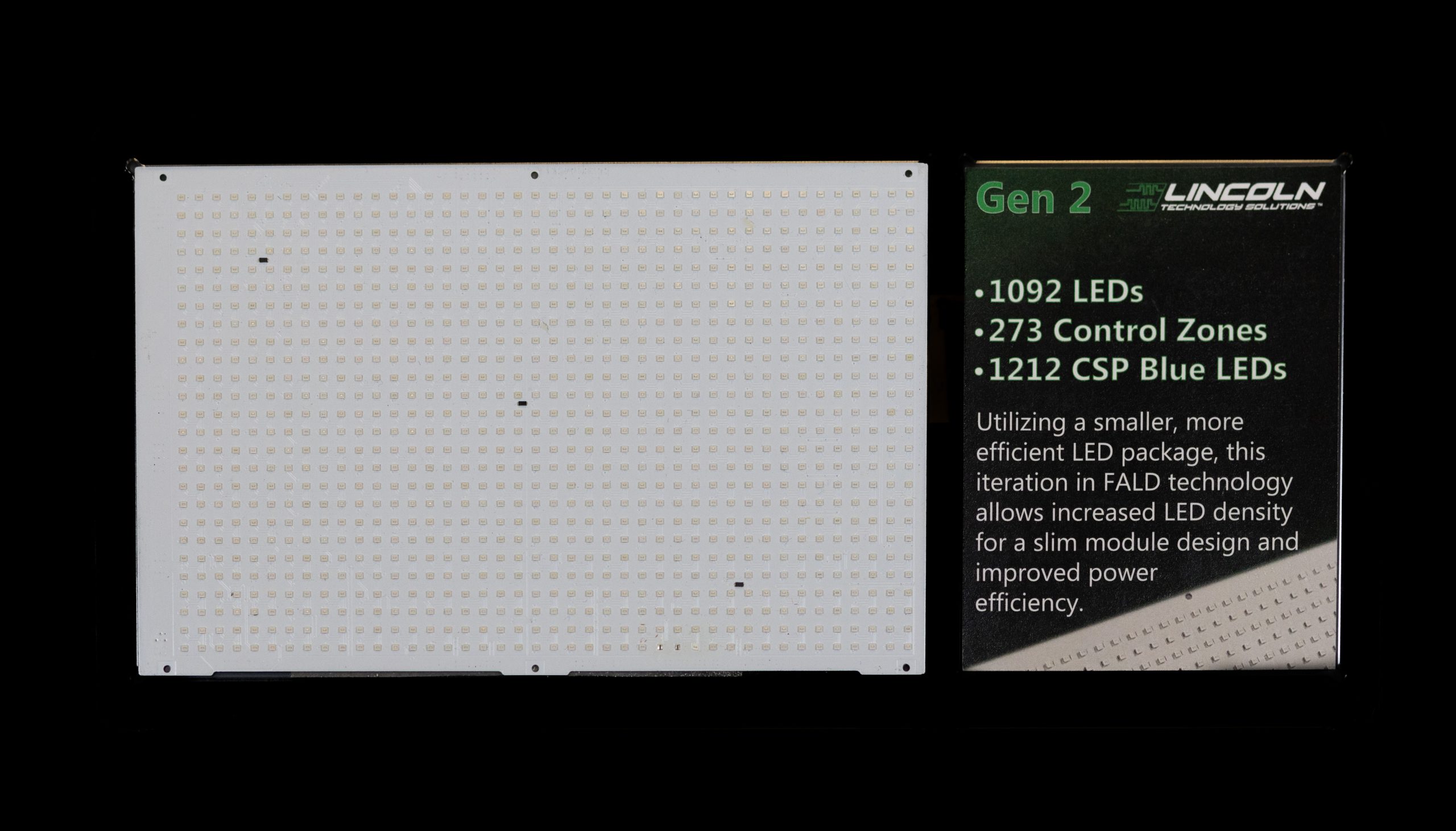
- Applications: 23.6″ retail shelf labels, 11.6″ new-size multi-market displays.
- Specs: 4014 LED packages, expanded form factors.
- Benefit: Brought Mini-LED efficiency to low-power retail applications while scaling to larger formats.
- Win: Opened up non-traditional markets where power and form factor are critical.
Gen 3: Precision & Cost-Efficiency with Multiplex Film Stack
Handheld device makers wanted portable screens that delivered HDR precision, but without the bulk. LTS built Gen 3 FALD Mini-LED — 1,000 LEDs, 1,000 zones, and multiplexed control.
The result: pinpoint dimming, reduced halo effect, and true HDR accuracy in 7″ and 10.1″ displays trusted in the field.
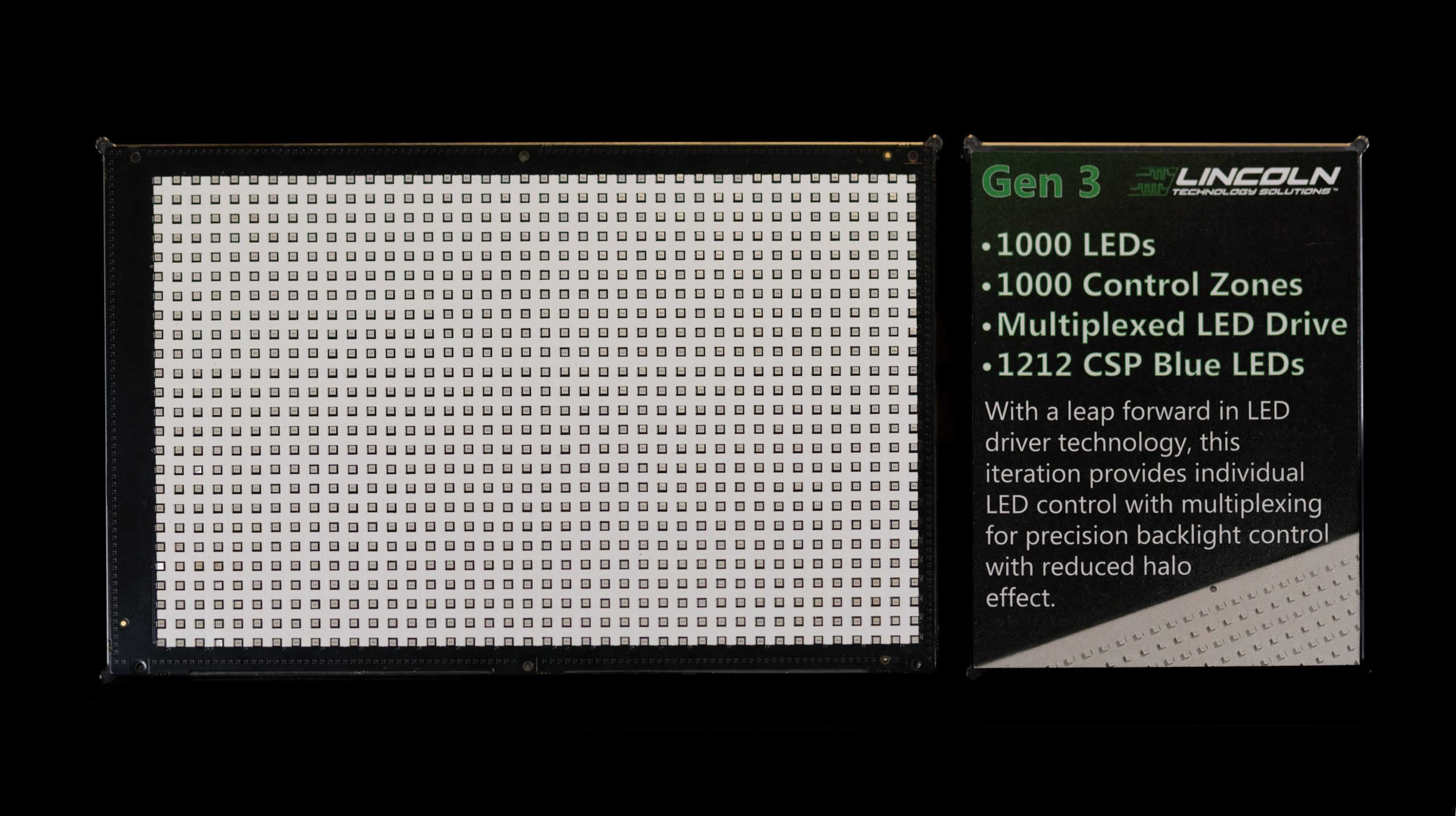
- Applications: 7″ and 10.1″ portable multi-market displays.
- Specs: 1212 CSP LEDs, multiplexed LED drive with film stack.
- Benefit: Delivered 1,000 independent zones with multiplex control, reducing halo effects and enabling true HDR fidelity.
- Win: Set a new standard for portable, ultra-bright, high-contrast displays across industries.
Gen 4 (Today): Reduced Halo Effect with Chip-on-Board (COB) Encapsulation
Medical teams needed thinner displays with flawless uniformity, while broadcasters wanted large 4K panels without sacrificing efficiency. LTS answered with Gen 4 FALD Mini-LED — 1,000 zones powered by Chip-on-Board LEDs, further reducing the known Halo effect.
The result: slimmer builds, improved thermal control, and scalable displays from 7″ to 32″.
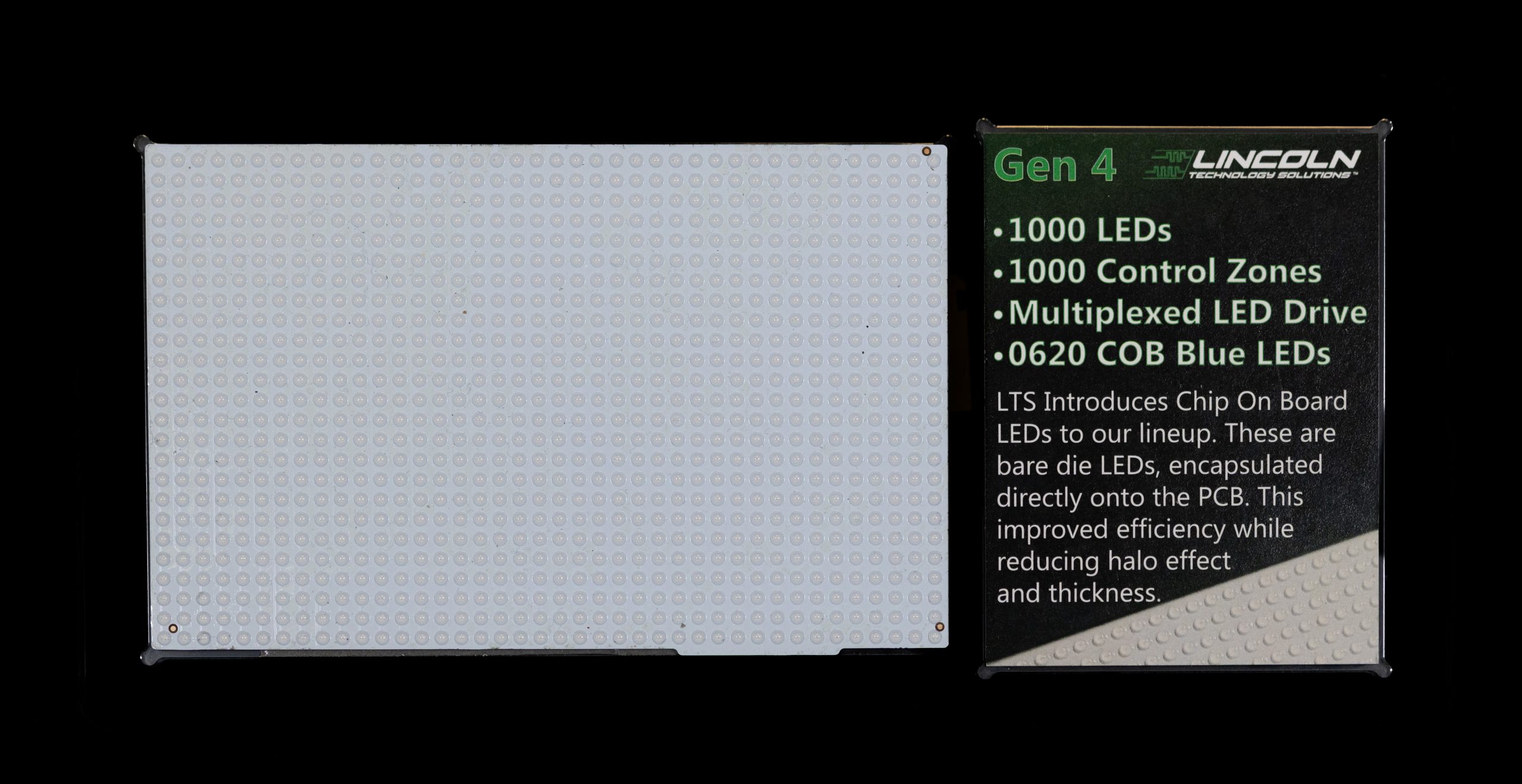
- Applications: 32″ medical/broadcast monitors, 7″ high-contrast multi-market panels.
- Specs: COB LEDs mounted directly to the PCB for maximum efficiency and heat management.
- Benefit: Thinner builds, higher contrast, factory-level calibration, and uniformity improvements.
- Win: Scalable across multiple sizes — from compact 7″ to large 32″ 4K displays — for medical imaging, broadcast control rooms, and beyond.
Key Advantages of LTS’s Mini-LED FALD Evolution
What makes each generation of our Mini-LED FALD more than just an engineering milestone? It’s the proven benefits our customers experience every day — whether in the field, in the operating room, or on the production floor. Here’s what sets LTS apart:
- Portable to Any Size — our product lineup offers sizes from handheld devices to 32″ medical monitors.
- Reduced Halo/Blooming — Advanced chip-on-board technology for reduced halo effect and sharper HDR visuals.
- Power & Heat Efficiency — Extraordinary power and heat efficiency critical for portable and industrial markets.
- Ultra-High Brightness — 3,000+ nits for outdoor visibility.
- True HDR, Deep Blacks, Exceptional Contrast— trusted in the most demanding environments.
Conclusion
The evolution of Mini-LED backlighting has reshaped what customers expect from high-performance LCDs. By replacing edge-lit designs with Full Array Local Dimming (FALD), Mini-LED enables thinner displays, higher brightness, and real power savings. At LTS, we’ve spent years refining this technology — shrinking LED packages from 2835 to 1212 to 0620, improving efficiency, and introducing multiplexed drivers that reduce complexity while boosting performance. These innovations aren’t about hardware alone; they’re about solving real customer problems: sharper HDR visuals, longer battery life in portable devices, and reliable performance in demanding environments. Our latest LCD255 delivers on that promise — offering up to 80% power savings, superior contrast, and a user experience far beyond edge-lit alternatives.
By pioneering Mini-LED FALD since 2018, LTS has ensured that our partners get first-mover advantage, not just the latest buzzword.
Looking Ahead
As we move into the future, mini-LED paired with FALD is more than a consumer TV trend — it’s a cross-industry enabler. Broadcast engineers rely on it for accurate color grading, surgeons depend on it for clarity during procedures, and industrial users value its rugged efficiency in challenging conditions. As the demand for energy-efficient, HDR-ready displays grows, FALD is poised to become the preferred backlight technology across industries. With each generation, LTS has proven our commitment to staying ahead of the curve.
From single-zone LEDs in 2018 to scalable Chip-on-Board mini-LED systems today, one principle guides us: Lead through innovation, not imitation.